

Breast lift with NAC repositioning and parenchymal reshaping for durable upper-pole support and a rejuvenated contour.
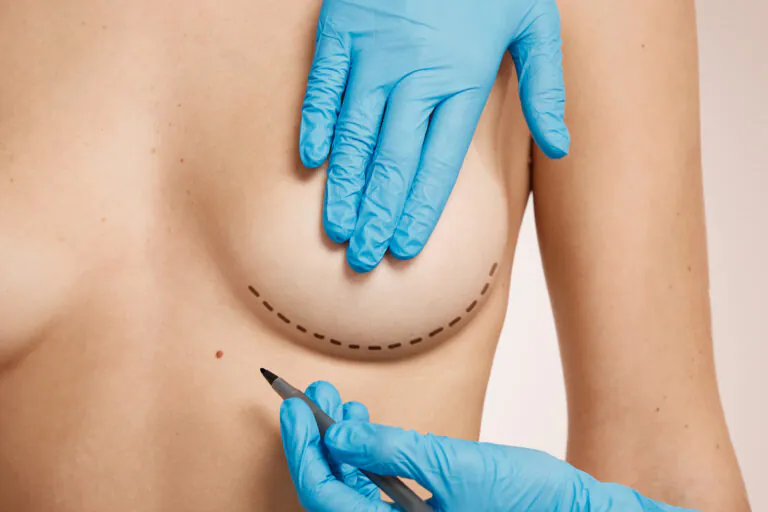
The surgical correction of mammary ptosis, clinically termed Mastopexy, represents a specialized intervention aimed at restoring the anatomical position and structural projection of the breast. This procedure is indicated for patients experiencing involutional changes or integumentary laxity, often resulting from gravitational effects, hormonal fluctuations, or significant weight cycles. The primary objective is the strategic repositioning of the nipple-areolar complex (NAC) to a superior anatomical plane, while simultaneously reshaping the parenchymal tissue to enhance the overall aesthetic contour. By addressing the disproportion between the cutaneous envelope and the underlying glandular volume, surgeons can achieve a stabilized and rejuvenated thoracic profile that respects the patient’s natural physiological proportions.
Advanced Mastopexy procedures synthesize meticulous surgical repositioning with a profound understanding of mammary architecture and ptosis correction. By strategically elevating the nipple-areolar complex and optimizing the dermo-glandular interface, these interventions restore structural projection and refine the thoracic silhouette. Each clinical approach is tailored to preserve neurovascular integrity while achieving a resilient, symmetrical, and anatomically harmonious aesthetic transformation.
The technical execution of Mastopexy requires a meticulous analysis of the degree of ptosis, classified systematically from Grade I to Grade III. Surgical strategies vary based on the extent of redundant skin and the requirement for parenchymal redistribution, utilizing specialized incision patterns such as periareolar, vertical, or wise-pattern (inverted-T) techniques. These approaches are designed to optimize tissue resection while preserving neurovascular integrity and lactational function. Furthermore, the integration of internal suspension techniques ensures the long-term durability of the elevated contour, providing a structural framework that resists future gravitational descent. Every surgical plan is calibrated to achieve a symmetrical and harmonious outcome, bridging the gap between functional reconstruction and aesthetic refinement.
Correction of Morphological Ptosis
- Nipple-Areolar Complex (NAC) Repositioning
- Parenchymal Tissue Reshaping
- Dermal Envelope Optimization
A comprehensive preoperative evaluation is essential to determine the most appropriate surgical pathway. This assessment considers the patient’s skin elasticity, glandular density, and overall thoracic anatomy to ensure that the selected technique aligns with the desired clinical outcomes while minimizing the risk of postoperative complications.
5 Critical Aspects of Advanced Mastopexy
Successful outcomes in Mastopexy are predicated on the precise management of the dermo-glandular interface and the strategic tensioning of the skin envelope. Current clinical research emphasizes the importance of preserving the subdermal vascular plexus to ensure optimal healing of the NAC and minimize the risk of tissue ischemia. In cases of significant volume deficit, a combined approach—known as Augmentation-Mastopexy—may be utilized, where prosthetic implants are integrated to provide both projection and elevation. This dual-purpose strategy requires a sophisticated understanding of pocket dynamics and tissue coverage to prevent long-term complications such as implant malposition or recurrent ptosis. It is also critical to manage the healing process through specialized compression protocols to ensure optimal scar maturation and tissue adherence.
The synthesis of autologous tissue remodeling with excisional surgery represents a significant advancement in mastopexy techniques. By utilizing glandular flaps, surgeons can “auto-augment” the upper pole of the breast, restoring youthful fullness without the necessity of external prosthetics in selected patients. This approach enhances the overall biological synergy of the procedure, adhering to the principles of anatomical permanence and structural integrity.

Clinical Insights and Patient Safety Protocols
The efficacy of Mastopexy is intrinsically linked to rigorous perioperative management and the implementation of evidence-based safety standards. Every procedure involves a detailed assessment of the patient’s mammary health, including preoperative imaging and a thorough review of glandular history to ensure the absence of underlying pathologies.
Advancements in surgical instrumentation and suturing techniques have refined the ability to achieve minimal scarring while maintaining maximal structural support. The primary goal of contemporary Mastopexy is to provide a results-oriented solution that restores the patient’s confidence through anatomical stabilization. Postoperative monitoring and adherence to personalized recovery guidelines remain the cornerstone of achieving a stable, refined, and long-lasting aesthetic result, ensuring the patient’s well-being throughout the entire clinical journey.